WFO IS DETERMINED TO CLEAN UP POLLUTION IN THE MEDITERRANEAN!
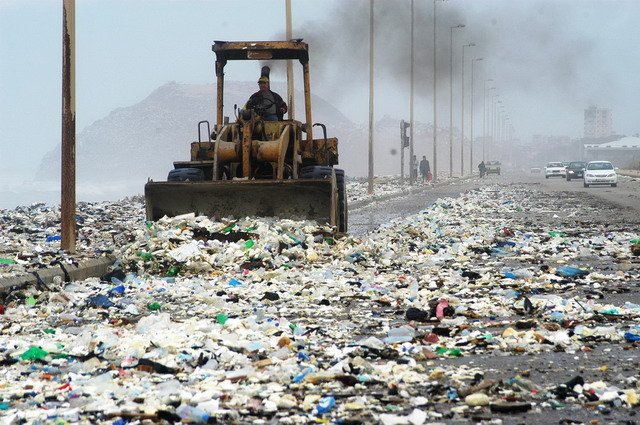
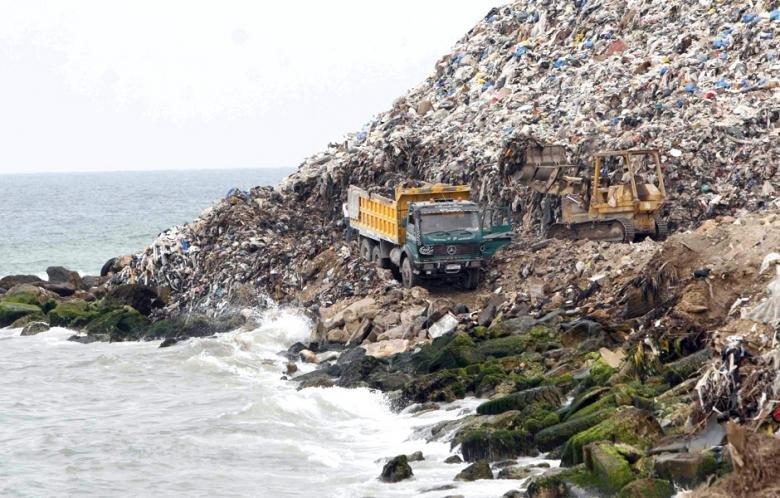
55-Meter-High Garbage Mountains in Lebanon Polluting Our Coasts Waste Free Oceans (WFO), a foundation that started in the European Union and quickly expanded its focus worldwide to raise awareness about marine pollution, has accelerated its efforts to clean the seas from waste.…
55-Meter-High Garbage Mountains in Lebanon Polluting Our Coasts
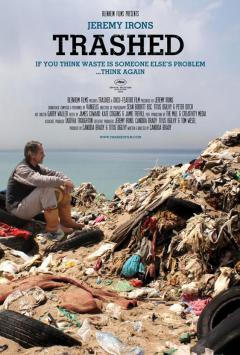
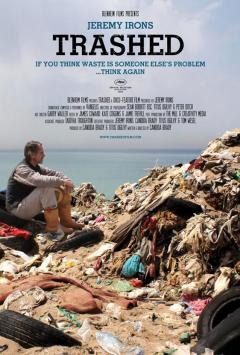
Waste Free Oceans (WFO), a foundation that started in the European Union and quickly expanded its focus worldwide to raise awareness about marine pollution, has accelerated its efforts to clean the seas from waste. Recently, at a conference held in Brussels, Belgium, WFO addressed the pollution in the Mediterranean—where Turkey also has a coastline—highlighting the major issue of the garbage mountains at the port of Saida in Lebanon. The topic drew extra attention as the film Trashed, starring actor Jeremy Irons and filmed at Saida Port, premiered in Brussels on the same day as the conference.
At the Brussels conference, Yavuz Eroğlu, President of WFO Turkey, Middle East, and Africa, gave a speech providing information about the work conducted in areas including Saida Port. Eroğlu emphasized the pollution spreading across the entire Mediterranean from the uncontrolled waste disposal area along Saida’s coastline. He discussed WFO’s approach: cleaning the sea surface with special nets in collaboration with local fishermen, removing underwater waste with divers, and conducting beach clean-ups with local community involvement. The scientific preliminary study and project were presented for the first time at the conference.
Eroğlu stressed that the garbage mountains along the coast should be relocated to modern waste management centers and that waste in both the sea surface and seabed must be removed. Regarding the Saida Port issue, he stated: “With funding from the European Investment Bank, this landfill will be moved to a newly built modern waste center, and WFO will start cleaning the sea through a pilot project. The project consists of three phases: the first phase is cleaning the seabed with divers, the second phase is cleaning the water surface with special nets operated by fishermen, and the third phase is beach clean-ups involving the local community.”
Collected waste will be used as fuel in cement factories. Eroğlu added: “The first phase involves analyzing the collected waste, which will guide the second, broader phase. This pollution harms the local population and all Mediterranean countries, including Turkey. Tourism and fishing are particularly affected, and there are serious environmental and public health risks. Plastics break down into smaller micro-particles due to sunlight and waves, which are ingested by fish and can end up on our tables, posing a health risk.”
Eroğlu also emphasized that marine litter is a global problem: “It is crucial for industries producing pollutants like plastics, glass, and metal to take a leading role under the concept of ‘responsible industry.’ As someone who founded the Environmental Club at Istanbul Technical University and has been active in environmental initiatives throughout life, while also owning a plastic packaging company, I can say this: economic development cannot come at the cost of people’s quality of life or health. Globally, we need to develop the concept of a ‘responsible industry’.”
Waste Free Oceans plans to start projects in Egypt and South Africa as well. In Turkey, WFO began its work in June with the ‘WFO Happy Fish Project’ on Büyükada, Istanbul, in cooperation with PAGEV and TÜDAV. The project collects floating waste using special nets that do not harm fish and ensures recycling.
On the same day as the Brussels conference, Jeremy Irons’ documentary Trashed premiered worldwide to raise awareness of millions of tons of plastic waste entering the oceans. In Brussels, Irons emphasized the importance of recycling waste: “We need to start somewhere. We have the experience, technology, and science. Europe should take the lead, and I believe other countries will follow.”
Pollution at Saida Port, Lebanon:
53% of the waste in Turkish seas comes from external sources. A major contributor is the waste and unregulated disposal sites from the city of Saida. The landfill in Saida, Lebanon, poses a serious threat to the Mediterranean coast. During the 1982 war, the city was left in ruins, and rubble was dumped on Saida’s shoreline. Over the years, additional waste from the city continued to be dumped in the area, forming massive garbage mountains along the coast. These mountains are 55 meters high and spread over a wide area, receiving an average of 300 tons of waste daily. Waves and winds carry this garbage across the Mediterranean, polluting coastlines throughout the region, including Turkey.