
Sem Plastik’s Investment in Palestine
At the end of 2008, when the global crisis began, SEM Plastik established a factory in Palestine with an investment of 4 million dollars and has been selling products from there to Israel and neighboring countries. Yavuz Eroğlu, the next-generation executive of SEM Plastik, stated that they are the first Turkish investor in Palestine and that they set up the factory in Hebron—kno
|
ARİF BAYRAKTAR İSTANBUL - 09.01.2012
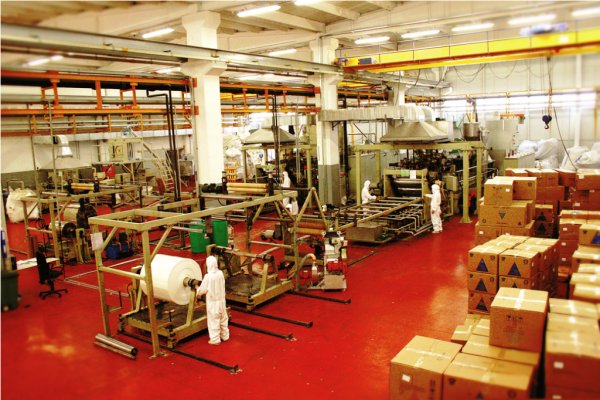
SEM Plastik, the first Turkish company to invest in Palestine, produces 3 million plastic items—including 1.2 million cups. A large portion of these products is sold to Israel and neighboring countries. Continuing its growth during the global crisis, the company is now preparing to establish a packaging factory in Silivri. SEM Plastik established a factory in Palestine at the end of 2008, when the global economic crisis began, investing 4 million dollars. From this facility, the company sells products to Israel and surrounding countries. Yavuz Eroğlu, the next-generation executive of SEM Plastik, stated that they are the first Turkish investor in Palestine and that they founded the factory in Hebron—the city of Abraham, symbolized by abundance—together with their Palestinian partner Hatem Hassume. SEM Plastik produces 3 million plastic items, including 1.2 million plastic cups, in its 400-square-meter indoor facility. General Manager Eroğlu noted that they also employ 30 Palestinians at the factory. Emphasizing that he continues to grow the company he inherited from his father with the philosophy: “War, in every form, is a threat to a businessman. The only thing that nourishes business is peace,” the young executive explained that, as a strategic measure to maintain production continuity, they also procure raw materials from Israel. SEM Plastik drew significant attention for growing an average of 73% annually between 2008 and 2010. Awarded as one of Turkey’s fastest-growing companies, Eroğlu attributed this success to their ability to “run uphill” during the economic crisis. “To be more concrete, in the last three years of crisis we made a 12-million-euro investment,” he said, adding that these steps generated quick returns. During the troubled years of 2008–2010, the company commissioned a TFT 1000 line with a capacity of 1.5 million plates per day and an inline line capable of producing 2.8 million cups per day. Thanks to this, SEM Plastik closed 2008 as the export leader of its sector and established the Palestinian factory in the same year. In 2009, the injection capacity was expanded with fully electric high-speed machines. In 2010, the company decided to invest in printed yogurt cups, and continued to acquire various types of machinery. Eroğlu stated that last year they produced 18,000 tons of plastic worth 100 million lira, exporting 35–40% of production. The company exported 22 million dollars’ worth of goods to 85 countries last year. As the market leader in the disposable products sector and among the top three in the packaging industry, SEM Plastik plans to continue investing in 2012. The company also manufactures plastic meal-service products used by major airlines such as Turkish Airlines, Emirates, and Lufthansa, and is preparing to establish a packaging factory on a 25,000-square-meter site in Silivri, Istanbul. The new factory, planned to be operational within the year, will operate at full capacity due to expected new regulations requiring many foods—especially meat—to be packaged. With a planned investment of 10 million dollars, the Silivri facility will house machinery for producing protein packaging preferred for meat, fish, and dairy. The factory is expected to employ approximately 300 people.
|
||||||||


