
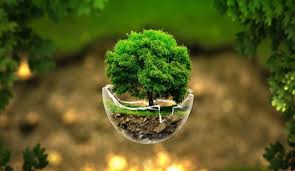
Recycling Concepts
Environmental impact , recycling ,degradation, biosimilation, which began to create more agendas in our country and sector in recent years, did not exactly fit into place. In some cases it is even used interchangeably.
Biodegradation (Degradable) – Biodegradable (Biodegradable) – Compostable(Compostable))
Environmental impact , recycling ,degradation, biosimilation, which began to create more agendas in our country and sector in recent years, did not exactly fit into place. In some cases it is even used interchangeably. When we look at foreign sources on this subject, there are still certain confusion, even though it is not like ours. I wanted to resolve my own curiosity and Share this information with our colleagues.
Biodegradable plastics and biodegradable plastics can be environmentally preferable and sustainable , according to petroleum-derived raw materials . If the products are biodegradable and compostable at the same time, the option of energy recovery is also possible as well as biological recovery.
When designing a new product , it is necessary to design it considering the environmental impact of the product. Important product groups in this regard are plastics and consumer products used in disposable products.
You need to design these products to be biodegradable and ensure they are included in an appropriate waste collection system. For example , biodegradable plastic products and paper waste with other organic compostable wastes (food , agricultural waste, etc.)) by composting together , a rich, carbon-rich compost can be obtained.
An increase in the amount of compost added to the soil organic carbon , water, and the increase in the amount of nutrients in the soil, the reduction of chemical additives ( it takes their place naturally) and is advantageous in terms of reducing plant diseases.
Composting is increasingly used in order to ensure the sustainability of agricultural production system.
In many countries , food waste and other biodegradable wastes are collected and composted separately, returning to the soil as a quality and valuable soil contribution and re-initiates the carbon cycle.
Polymers used to be designed to be intact. In other words, the main purpose was to protect the shape of a container made of plastic and not deteriorate in use. After use, it was not a much thought. Today , the purpose is to produce polymers that perform their full function but then disappear without damaging the environment. More importantly , the product made from this polymer is not toxic in the small parts of nature, and in the nature of microorganisms in the soil within a certain period of time can be destroyed(digested) is. In addition , these raw materials and products made from these raw materials should be accepted in the market in a few weeks ,such as in a short period of time, in the private waste collection areas to deteriorate and disappear to consumers, without any doubt should be able to show.
Hydrophilic Property :
” Water - friendly " soluble in water or other polar solvents “
Hydrophobic Properties :
” Water-resistant " water-soluble property .
Bozunabi Can ( Degradable Plastics
This is the most common term. This is used to describe plastics that can be damaged by both physical and biological effects. As an example of physical effect, we can give the sun rays(ultraviolet effect) or temperature.As an example of chemical effect, we can show microbiological effects.
“Play doctor”(accelerated by certain catalysts and additives which are effective at temperatures decomposition) or “photo-degradable” starch-polyethylene-based plastics can cause environmental problems.
Such distortions cause smaller particles that pollute the compost , soil or sea.
These particles, such as compostable plastics, can leave residues in the soil as soon as they decay.
These hydrophobic residues, which have a large intact surface area , hold the hydrophobic highly toxic substances such as PCB and DDT, and assume the role of a kind of poisonous substance carrier.
Therefore , it is essential to ensure that the raw material or the product is biologically degradable in the garbage collection environment within a certain period of time. In other words, the only “decay” of the product does not constitute an environmental guarantee. In other words, “decay” is not all about the environment.
Biodegradable Plastics
Biodegradable plastics are plastics which are completely digested by microorganisms in the garbage collection system (entering the food chain of microorganisms).
This activity of microorganisms for nutrition is measured by converting the carbon in the decaying plastic into CO2 through the process inside the cell. For a more formal definition
"EN14995 plastics – compostability assessment – test scheme and features".
Compost
Organic matter is a substance that provides nutrients and improves soil properties ; it contains decaying organic matter and regulates the soil.
Composting
It is a Solid Waste Management System technique that converts organic materials into carbon dioxide ,water and humus by natural methods and by the help of mycorganisms.
Composting Plastic
In addition to being degradable by microorganisms , it is necessary to comply with a certain period of time to say compostable to a plastic. For example,materials with ASTM 6400 ( specification for compostable plastics), ASTM d6868 ( biodegradable paper coatings) or EN 13432 ( compostable packaging) standards are biodegradable in industrial composting environments in less than 180 days.
(Industrial compost environment the temperature of microorganisms at 60 ° C is also a certain humidity.)
Compostable plastics do not leave residues for more than 12 weeks ,and do not contain heavy metals and toxins , and do not harm plants.
PLA polylactic acid :
The PLA is produced from corn starch obtained from the leaves of Egypt. Carbon dioxide enters the leaves of the plant from the small holes in the leaves of the plant. The veins of the Leaf provide water to the leaf cells . The Sun's energy in the Leaf is stored in small discs called chloroplasts. Chloroplasts produce cells, sugars and oxygen. Plants use sugar as the necessary fuel for themselves. Unused sugar is stored in seeds. Farmers harvest corn and sell corn to Mills. Millers cook corn , corn softens after this process . Corn is cooked at 122 Fahrenheit for 30-40 hours.Waste water is used in other stages of production or stored for the production of caviar feed. The machines grind the corn and segregate the starch by passing this mixture through the filter. Starch is then converted into sugar. Microorganisms then convert this sugar into lactic acid with fermentation. Lactic acid molecules combine to form rings called Lactid monomers. Lactide rings are then opened to form Polylaktid polymers by merging with each other. This process is called polymerization. The material is then brought into the form of grains (granules) in the pyrinc size, which is the form to be used with the convenience of the plastic industry. Then , these granules are processed with special machinery , equipment and information , and transformed into products such as cups , plates , boxes , containers ,and valves.
Yavuz Eroğlu
general manager
SEM plastik San.and Tic.A.S.